
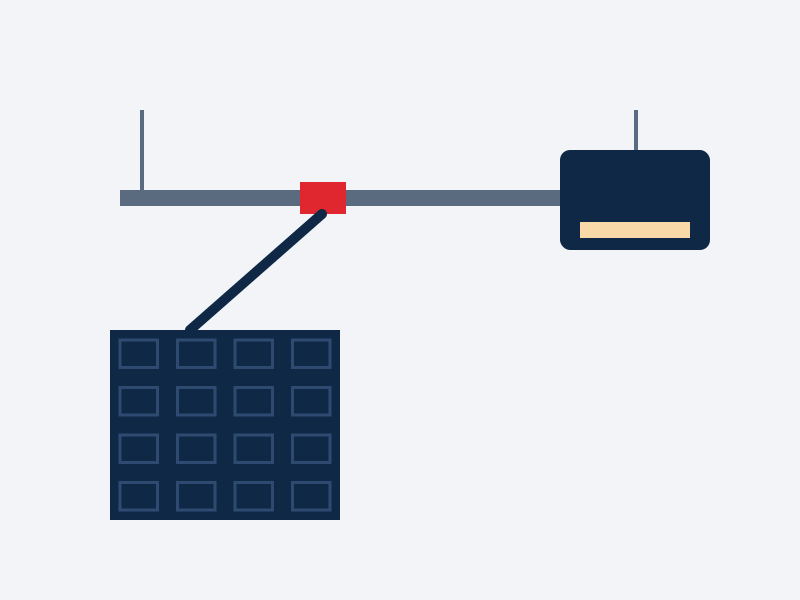
Short answer: for most Florida homes a belt-drive opener with battery backup is the best all-round choice. Wall-mounted openers suit high ceilings and garages with overhead storage, and chain drives remain a sound budget option for detached garages.
Opener types compared
| Type | How it works | Noise | Best suited to | Consider |
|---|---|---|---|---|
| Chain drive | Metal chain pulls a trolley along a rail | Louder | Detached garages, heavy doors, tighter budgets | Needs periodic chain adjustment and lubrication |
| Belt drive | Reinforced belt in place of the chain | Quiet | Attached garages, rooms above the garage | Costs more than chain |
| Screw drive | Trolley rides a threaded rod | Moderate | Simple mechanism with few parts | Needs the correct lubricant; less common in new installs |
| Wall-mount (jackshaft) | Mounts beside the door and turns the torsion shaft | Very quiet | High ceilings, overhead storage, car lifts | Requires torsion springs, side room and a nearby outlet |
| Direct drive | Motor travels along a fixed chain in the rail | Very quiet | Homeowners who prioritise low noise | Brand-specific parts |
Features that matter in Florida
Battery backup
Power cuts go hand in hand with summer storms and hurricanes. An opener with battery backup keeps working for a limited number of cycles, so you are not left lifting the door by hand in the rain, or unable to get the car out before an evacuation.
Surge protection
Central Florida has some of the most frequent lightning in the country, and opener circuit boards are vulnerable. A surge protector made for garage door openers is an inexpensive safeguard. It reduces risk; it does not make the opener immune to a direct strike.
Corrosion resistance
In an unconditioned garage, steel chains and rails rust. Belt drives avoid the chain altogether, and any opener benefits from an annual check.
DC motors and soft start
Most current openers use DC motors that start and stop gently. That is easier on the door and noticeably quieter than older AC units.
Smart control
Wi-Fi openers let you check and close the door from your phone, which is useful when you are away during storm season or managing a rental property.
Capacity for heavier doors
Wind-rated and insulated doors weigh more. The springs carry that weight, not the opener, but the opener should still be matched to the door's size and type.
What an opener cannot fix
If your door is heavy, jerky or loud, a new opener will not cure it. The door must be balanced and running freely first; otherwise the new opener inherits the old one's problems and wears out early.
Safety basics for any opener
Every residential opener should have working photo-eye sensors and automatic reversal. Test the reversal monthly with a flat 2x4 under the door. Federal safety rules have required these protections on openers manufactured since 1993; if yours has no sensors, replace it. The U.S. Consumer Product Safety Commission publishes guidance at cpsc.gov.
We service and install the major brands, including LiftMaster, Chamberlain, Genie and Sommer. See opener repair and replacement or call (386) 267-2144.