
Buying guide
Garage Door Styles, Materials & Options
A homeowner's guide to raised-panel, modern, carriage-house, glass, insulated, wind-rated and commercial garage doors.
Choosing a garage door means balancing appearance, material, insulation, wind rating and budget. This guide explains the main styles and how they compare.
Compare at a glance
| If your priority is... | Consider | Why |
|---|---|---|
| Lowest upfront cost | Single-layer raised-panel steel | Simple construction, widely available |
| A cooler attached garage | Insulated triple-layer steel | Reduces heat gain through the door |
| Storm protection | Wind-rated door for your address | Engineered and approved for local wind loads |
| Modern appearance | Flush steel or full-view glass | Clean lines; glass adds daylight |
| Traditional character | Carriage-house or wood-look | Period appearance with low upkeep |
| Minimal maintenance in humidity | Aluminum or composite | No rust and no refinishing |
| A busy commercial opening | High-cycle commercial sectional or rolling steel | Hardware built for frequent use |
| Material | Durability | Rust or rot | Dent resistance | Upkeep | Relative cost |
|---|---|---|---|---|---|
| Steel (single layer) | Good | Can rust if finish is damaged | Lower | Low | Lowest |
| Steel (insulated, 3 layer) | Very good | Can rust if finish is damaged | Good | Low | Moderate |
| Aluminum | Good | Does not rust | Lower | Very low | Moderate |
| Aluminum and glass | Good | Does not rust | Glass can break; tempered or laminated | Low | Higher |
| Composite / wood-look | Very good | Resists rot | Good | Low | Moderate to higher |
| Natural wood | Good with care | Can rot and warp in humidity | Good | High: regular refinishing | Highest |
| Construction | What it is | Heat resistance | Noise | Strength |
|---|---|---|---|---|
| Single layer | One steel skin, no insulation | Minimal | Loudest | Most flexible |
| Double layer | Steel skin with a polystyrene backing | Moderate | Quieter | Stiffer |
| Triple layer, polystyrene | Insulation between two steel skins | Good | Quiet | Strong |
| Triple layer, polyurethane | Foam bonded between two steel skins | Best for a given thickness | Quietest | Strongest |
Comparisons are general guidance. Specifications vary by manufacturer and model; "relative cost" indicates typical ordering only, not prices.
Traditional Raised-Panel Doors

The classic American garage door: rows of rectangular panels pressed into steel. Raised-panel doors suit most home styles, are available from every major manufacturer and offer the widest choice of sizes, colors and price points.
- Features: Short-panel or long-panel layouts; optional windows in the top section.
- Materials and insulation: Steel in one, two or three layers; also available in wood and composite.
- Durability and maintenance: Wash with mild soap twice a year. Touch up scratches promptly so bare steel does not rust.
- Installation considerations: Standard track and springs. Most models have wind-load-reinforced versions.
Modern Contemporary Doors

Flush or lightly grooved sections with clean horizontal lines. These doors suit contemporary architecture and are increasingly chosen for remodels where a plain, calm facade is the goal.
- Features: Flush, ribbed or plank faces; optional slim vertical or horizontal windows.
- Materials and insulation: Insulated steel, aluminum, or composite cladding.
- Durability and maintenance: Smooth faces show dirt and dents more readily than textured ones; dark colors absorb more heat.
- Installation considerations: Flat sections may need additional internal reinforcement at wider sizes.
Carriage-House Doors
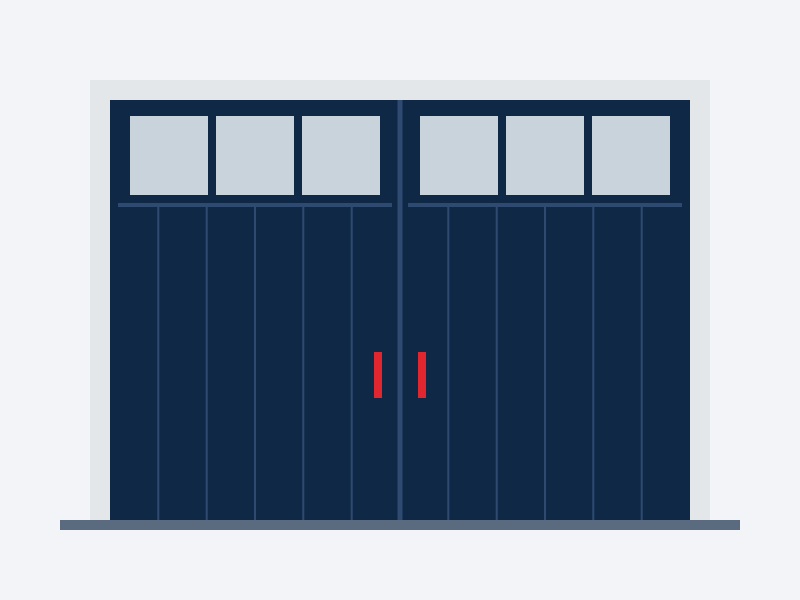
Styled to look like the swing-out doors of an old carriage house, but built as a sectional door that rolls overhead. Decorative handles and strap hinges complete the look.
- Features: Arched or square tops, cross-buck or vertical board patterns, divided-light windows.
- Materials and insulation: Stamped steel, steel with composite overlays, or wood.
- Durability and maintenance: Overlay doors have joints that should be inspected for sealant condition. Decorative hardware may need occasional tightening.
- Installation considerations: Overlay construction adds weight; springs and opener must be matched accordingly.
Full-View Glass Doors

An aluminum frame filled with glass panels. Full-view doors bring daylight into the garage and give a striking modern appearance. They are also used on patios, restaurants and showrooms.
- Features: Clear, frosted, tinted or mirrored glass; anodized or powder-coated frames.
- Materials and insulation: Aluminum frame with tempered or laminated glass, single or insulated.
- Durability and maintenance: Clean glass as you would windows. Check glazing seals periodically.
- Installation considerations: Heavy. Requires correctly sized springs. Insulating and impact-rated glass options affect weight and cost; confirm wind and impact ratings for your address.
Insulated Garage Doors

Any door style built with an insulating core. Insulation reduces heat transfer, stiffens the door and makes it quieter. In Florida the main benefit is a cooler attached garage and less heat reaching adjoining rooms.
- Features: Insulation performance is expressed as an R-value; higher numbers resist heat flow better.
- Materials and insulation: Polystyrene panels fitted into the section, or polyurethane foam injected between steel skins.
- Durability and maintenance: Same as the equivalent non-insulated door. Three-layer doors resist dents better because of the inner steel skin.
- Installation considerations: Heavier than non-insulated doors of the same size; springs are sized to suit.
Steel Garage Doors

Steel is the most common garage door material: strong, affordable and available in every style. Quality varies with steel thickness, the number of layers and the paint system.
- Features: Embossed wood-grain or smooth finishes; factory-applied colors.
- Materials and insulation: Galvanized steel skins, single-layer through three-layer sandwich construction.
- Durability and maintenance: Rinse off dirt and salts; treat chips before rust starts. The bottom section is the most vulnerable.
- Installation considerations: Standard. Thin single-layer doors should have an opener reinforcement bracket.
Aluminum Garage Doors

Aluminum does not rust, which makes it attractive in humid and coastal environments. It is used both for full-view glass doors and for lightweight panel doors.
- Features: Slim frames, wide range of finishes, pairs well with glass.
- Materials and insulation: Extruded aluminum frames with aluminum, composite or glass panels.
- Durability and maintenance: Low. Wash periodically; anodized finishes are particularly durable.
- Installation considerations: Aluminum panels dent more easily than steel. Check wind-load ratings carefully, as lightweight doors need appropriate reinforcement.
Wood-Look Garage Doors
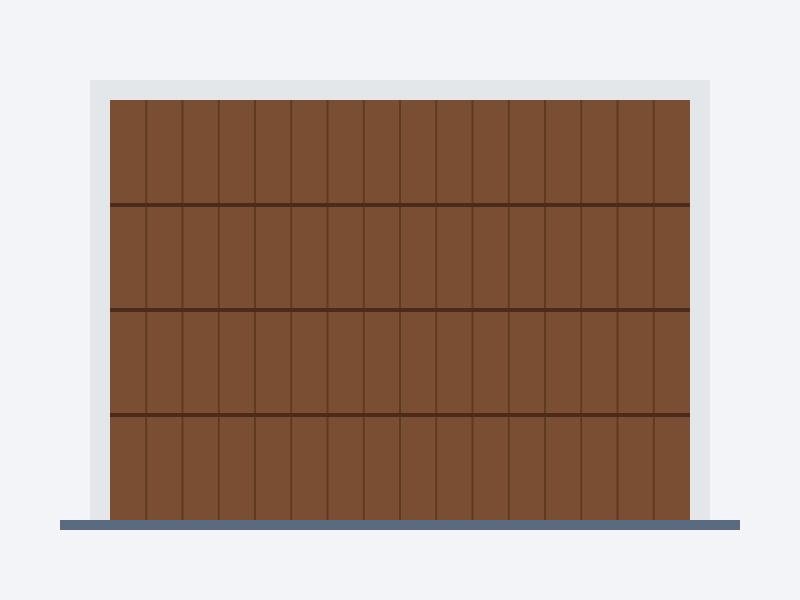
The warmth of wood without its upkeep. Wood-look doors use steel or composite with printed, embossed or molded grain that is convincing from the street.
- Features: Plank, carriage-house and flush designs in a range of wood tones.
- Materials and insulation: Steel with wood-grain finish, or composite and fiberglass cladding over an insulated steel core.
- Durability and maintenance: Wash gently; avoid abrasive cleaners and pressure washers on printed finishes. No staining or sealing required, unlike real wood.
- Installation considerations: Standard for steel versions; composite-clad doors are heavier.
Wind-Rated & Hurricane-Rated Doors

Doors engineered and tested to resist specific wind pressures, with or without resistance to windborne debris. Almost any style can be ordered in a wind-rated version.
- Features: Horizontal reinforcement struts, heavier track and brackets, additional hinges and fasteners; impact-rated models add tested skins or glazing.
- Materials and insulation: Typically steel; rated aluminum and glass options exist.
- Durability and maintenance: Never remove struts or hardware. Have fasteners and brackets checked annually.
- Installation considerations: The rating applies only when the door is installed exactly as the manufacturer's approval specifies, including fasteners and framing attachment. A permit is commonly required.
Commercial Overhead Doors

Built for frequent use and larger openings. Commercial doors include ribbed steel sectional doors, insulated sectional doors, aluminum full-view doors and rolling steel doors that coil above the opening.
- Features: High-cycle springs, heavier hardware, vision panels, chain hoists or powered operators.
- Materials and insulation: Heavier-gauge steel, insulated sandwich sections, aluminum and glass, or interlocking steel slats.
- Durability and maintenance: Planned maintenance matched to the daily cycle count.
- Installation considerations: Specified by opening size, usage, wind load and any fire or security requirements.
Wind ratings in Florida
Garage doors in Florida must meet wind-load requirements for the property's location. Requirements are set by the Florida Building Code and enforced by your local building department. Always confirm the rating required at your address before ordering.
Ready to choose a new garage door?
Call Pro Guy to discuss styles, measurements and the wind rating appropriate for your home.
Same-day appointments depend on technician availability, location and required parts.